Harnessing resilience - developing a challenge mindset
- summerrwhiteley
- Dec 28, 2020
- 7 min read
Updated: Jan 6, 2021
“The most powerful weapon any athlete can possess is a resolute refusal to quit”
– Ross Edgley
Blog Contents:
- What is resilience
- Effects of resilience
- Developing a challenge mindset
- Psychological training
- Conclusion
- Take away messages
The year 2020 has been somewhat difficult for all of us, some may even say a complete right off, unless of course you are a Liverpool fan! Many events that some athletes have been training for their whole life (e.g., the Olympics) or all season for have been cancelled or postponed which has caused a devastating effect. But what if this year was always meant to be this hard, what if this year was a year of learning and growth? What if this year was to make us all more resilient? This blog will take you through what is meant by resilience, the effects of resilience and how athletes can harness resilience themselves in order to become more successful.
What is resilience:
As humans we pride ourselves on improving one’s self (1,2) - it is evolutionary in order to survive. However, self-improvement these days comes in other forms, not evolutionary, but in forms such as a job promotion, to be the best athlete or to improve one’s lifestyle choices. But, how is it that only a few athletes become successful and end up on top of the podium? How is it that Dame Kelly Holmes after multiple injuries and set backs was able to win two gold medals at the Olympic games or why could Micheal Phelps continually beat his opponents on multiple events? The secret to their success is in this blog.
Resilience defined as “the mental process and behaviours of an individual and their ability to either withstand or adapt to the demands of the environment” (3) cannot be found without some kind of adversity; for example, parental loss at a young age or getting injured(4,5). Evans (6) believes that life’s greatest gifts come wrapped in adversity, thus highlighting the need for challenge and chaos in our lives in order to become more resilient and successful. It is thought that 75% of people experience some form of challenge and/or adversity by the time they reach 20 years of age (7). It seems that challenge in life is “normal” and experienced by most people. However, in world where we are now more susceptible to stress, exhaustion, and overwhelm it is how we respond to these negative experiences that make us more or less resilient (5). Therefore, resilience is formed by our ability to be moulded and shaped by these experiences, and the notion to be persistent in our life goals (8).
"There are always going to be obstacles that come in your way, stay positive"
- Michael Phelps
Effects of resilience:
As an athlete, resilience has a 90% impact on performance, suggesting that the level of resilience that an individual’s holds will determine who will be successful and who will fail (9). It seems that resilience is therefore, one of the most important psychosocial determinants to be successful. Unfortunately, mental resilience is not a skill that all participants and coaches naturally possess (10). Thus, resilience should and needs to be developed over time as like any physical resilience (11).
How to develop resilience
Developing a challenge mindset:


It is understood that it is difficult to maintain positive habits all the time and that it is inevitable that we will get negative thoughts sometimes. The effectiveness of resilience training depends on how much the athlete is willing to engage in the support as well as the commitment from the deliver (usually coach) in their breadth and depth of understanding resilience training (2). To develop a challenge mindset it is important to develop the 4 psychological skills below (3). Additionally, it is important to be aware of your thoughts and feelings, and accept that there is a choice to be made.

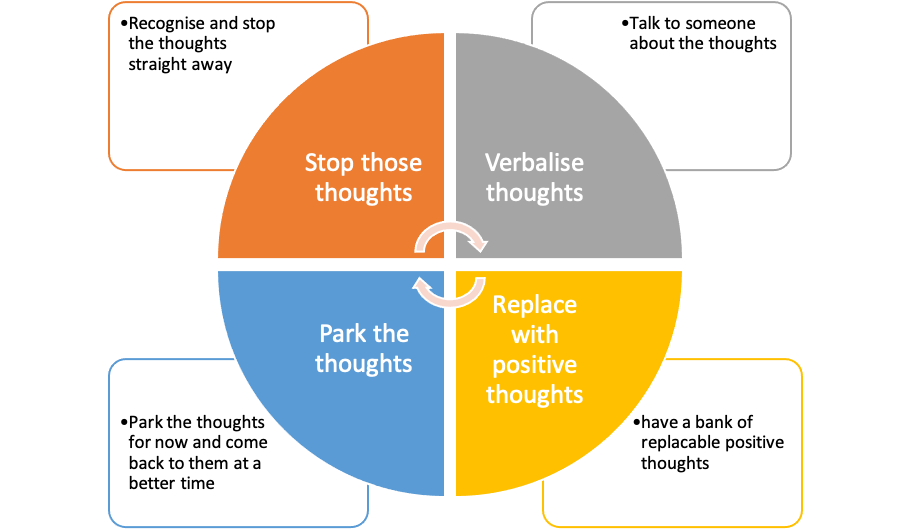
A challenge mindset is all about positive thinking and changing our negative thoughts into more positive ones. It is how we react and interpret our challenges and adversity. We know that having a challenge mindset is key to developing psychological resilience. This provides a protective quality that allows an individual to maintain their performance and wellbeing when placed in a pressurised or stressful situations and/or, develops the ability of an individual to bounce back after their wellbeing and performance have been temporarily disrupted when under pressure. It is important to understand the psychology behind building a resilient mind which will be discussed next in the blog.
Psychological training:
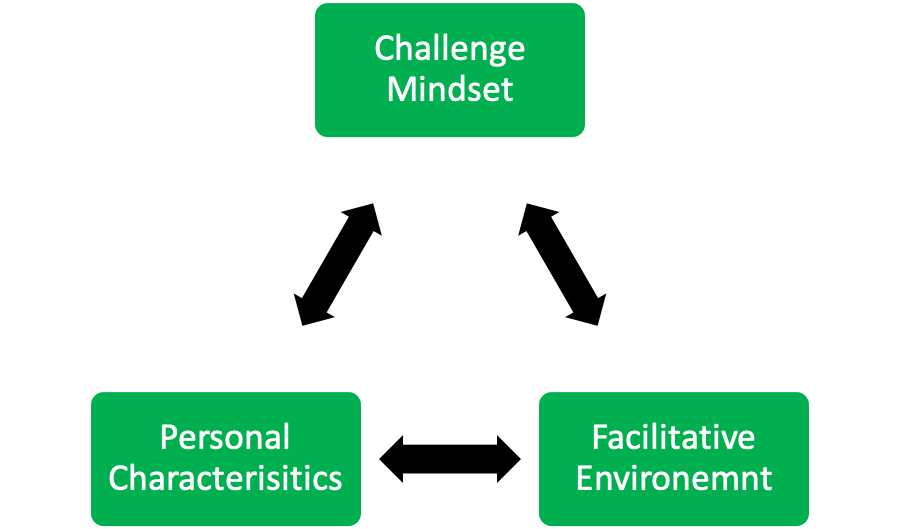
To begin psychological training, we must first understand the three main factors that are - personal qualities, challenge mindset and facilitative environment that you need to focus on in order to gain and develop a more resilient mindset. The framework “The Mental Fortitude training program for sustained success” (3) is used to understand the three multiple social factors that can affect our motivation and resilience. It is important to recognise that resilience training is a multifactorial endeavour, therefore, the three metal fortitude components need to be addressed appropriately in order to be successful. Psychological training can be used by performers before, during and after a stressful or adverse encounter for example the final of a race.
The diagram shows that you must possess certain personal qualities and facilitative environment in order to create a challenge mindset. The next part of the blog will look at these in more detail and discuss how this affects your mental resilience.

Personal Characteristics:
Personal characteristics are probably the hardest aspect of this diagram to change. Psychologically resilience characteristics can be seen and described in the video below. Characteristics are harder to change than the environment as characteristics are innate, and these are developed and moulded over time. However, the good news is that these characteristics can continue to change over time and therefore, psychological resilience can be developed and enhanced! (12).
Personal characteristics:
- Outgoing
- Belief in oneself and one’s ability
- High personal standards
- Positive expectations about the future
- Want to demonstrate competence
- Controls a situation
- Enjoys doing activities and tasks
Facilitative Environment:
It is important to consider the environment around us if we are wanting to achieve at the highest level (3,13). Similarly to the challenge mindset aspect of this model, the environment should also be positive. For example, athletes should surround themselves with a supportive and encouraging team. Everyone has their breaking point in which the environment or emotions get too much. Coaches and support systems need to create a challenging and supportive environment that fosters your development of psychological resilience to increase performance success (14). It is important to practice resilience training within pressured training environments, for example, manipulating the environment to evoke a stress-response with the aim of maintaining functioning and performance under pressure.

Psychological skills:
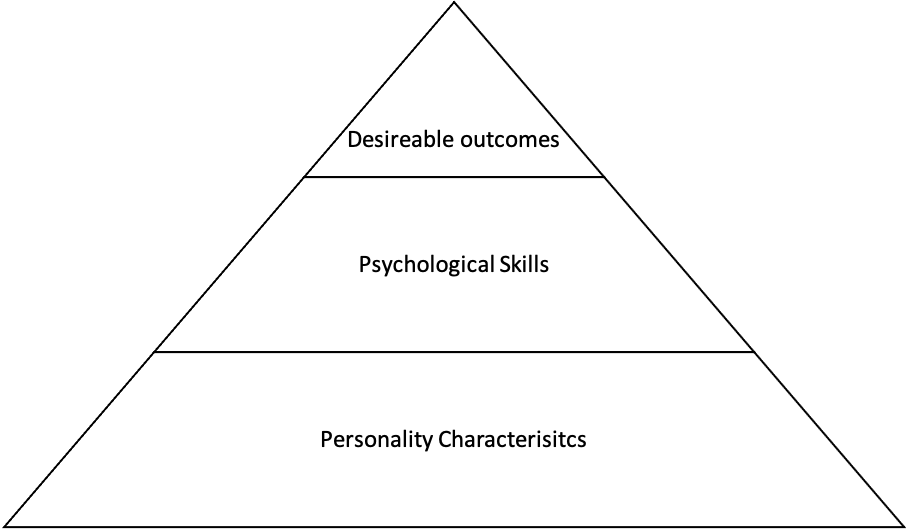
Now it has been identified what personal characteristics a resilient individual may hold or develop and the environment where which these characteristics can flourish, more importantly let’s consider some psychological skills to help develop more resilience in our mind.
As an athlete, you should try to be more aware of oneself, others and the environment that you are in as this will help you be in control of the situation therefore being more resilient to what life throws at you. This lends itself to next skill for you to develop; you should plan for expected and unexpected events, a plan allows you to cope better with challenges even if they are unexpected. Furthermore, it is really important to set effective goals and direct your attention and thoughts towards these to achieve them.
A previous study found that if you try to harness these psychological skills then you will become more optimally motivated, you will be able to better regulate your thoughts, mental images and emotions as well as, handle pressure and cope with destress. Additionally, they found that you will be able to attain, maintain and regain confidence in oneself and others. Furthermore, you will automatically execute these learnt psychological skills, process, strategies and routines. Your relationships will benefit and you’ll be able to recognise support that is available to you so you can focus your attention on what really matters.
Conclusion:
To summarise, psychological resilience is key to becoming a successful athlete. Growth is the ultimate goal (12). Mindsets can be changed therfore, resilience can be developed by anyone who is willing to put in the psychological and physical training. If we can take away one thing from this year of misfortunate events it will be that we can do anything we put our minds to.
Take away messages:
· Anyone can build mental resilience
· Resilience is a powerful tool for performance that needs to be practiced
· Change the 3 factors – personal qualities, challenge mindset and facilitative environment
· Use the four key strategies to develop a challenge mindset
References:
1. Dong J. Revolution, resistance and resilience. Routledge handbook of sport, gender and sexuality. 2014 Mar 5:87.
2. Dweck CS. Mindset: The new psychology of success. Random House Digital, Inc.; 2008.
3. Fletcher D, Sarkar M. Mental fortitude training: An evidence-based approach to developing psychological resilience for sustained success. Journal of Sport Psychology in Action. 2016 Sep 1;7(3):135-57.
4. Sandler I. Quality and ecology of adversity as common mechanisms of risk and resilience. American journal of community psychology. 2001 Feb;29(1):19-61.
5. Sarkar M, Fletcher D. Adversity-related experiences are essential for Olympic success: Additional evidence and considerations. InProgress in Brain Research 2017 Jan 1 (Vol. 232, pp. 159-165). Elsevier.
6. Richard Paul Evans Quotes (Author of The Prisoner of Cell 25) [Internet]. Goodreads.com. 2020 [cited 28 December 2020]. Available from: https://www.goodreads.com/author/quotes/46097.Richard_Paul_Evans
7. Jay M. The Secrets of Resilience. Wall Street Journal. 2017:11-2
8. Sarkar M, Fletcher D, Brown DJ. What doesn’t kill me…: Adversity-related experiences are vital in the development of superior Olympic performance. Journal of Science and Medicine in Sport. 2015 Jul 1;18(4):475-9.
9. Coutu DL. How resilience works. Harvard business review. 2002 May 1;80(5):46-56.
10. Sarkar M, Fletcher D. 16 Developing resilience through coaching. The psychology of sports coaching: Research and practice. 2016 Jul 15:235.
11. Grey-Thompson T. Duty of care in sport: Independent report to government. Accessed July. 2017;11:2017.
12. Atwood JR. Mindset, Motivation and Metaphor in School and Sport: Bifurcated Beliefs and Behavior in Two Different Achievement Domains. Online Submission. 2010
13. Fletcher D. Resilience in sport: a critical review of psychological processes, sociocultural influences, and organizational dynamics. The Organizational Psychology of Sport. 2016 Oct 14:138-68.
14. Fletcher D. Psychological resilience and adversarial growth in sport and performance. InOxford Research Encyclopedia of Psychology 2018 Dec 20.
What a great read Summer! I really enjoyed this, and I will definitely be looking at ways to reshape my thoughts to become more resilient, especially now I know how important it is for performance. I will certainly forward this over to other clubs as I'm sure they will find it as fascinating as I have. Thanks!
Really interesting read with relevant visuals and videos to support the content, well done summer.
Useful breakdown of mental aspects of performance/achievement, with interesting and relevant video clips.
Hey Sums nice work mate. Very thorough. I like to think sport / competition is pretty simple really and a huge chunk IS about mental resilience. As I have said many times in my coaching career you effectively start most races 'tied for the lead' and at some point in that race you will either go on to win it or you will have to 'give' it to your competitors. The decision for when that point happens is fitness / skill related but more that mentally you are not able to / want to fight anymore. Talent in sport is great asset but internal fight is a better one and will take you further. This can be coached and developed…
This Blog is very insightful. Has given me ways in which I can enhance my own training. I would recommend this to a friend